10 Brilliant Ways AI Is Transforming Transportation in 2026
Published on: 23 October 2026
Author: Annapurna
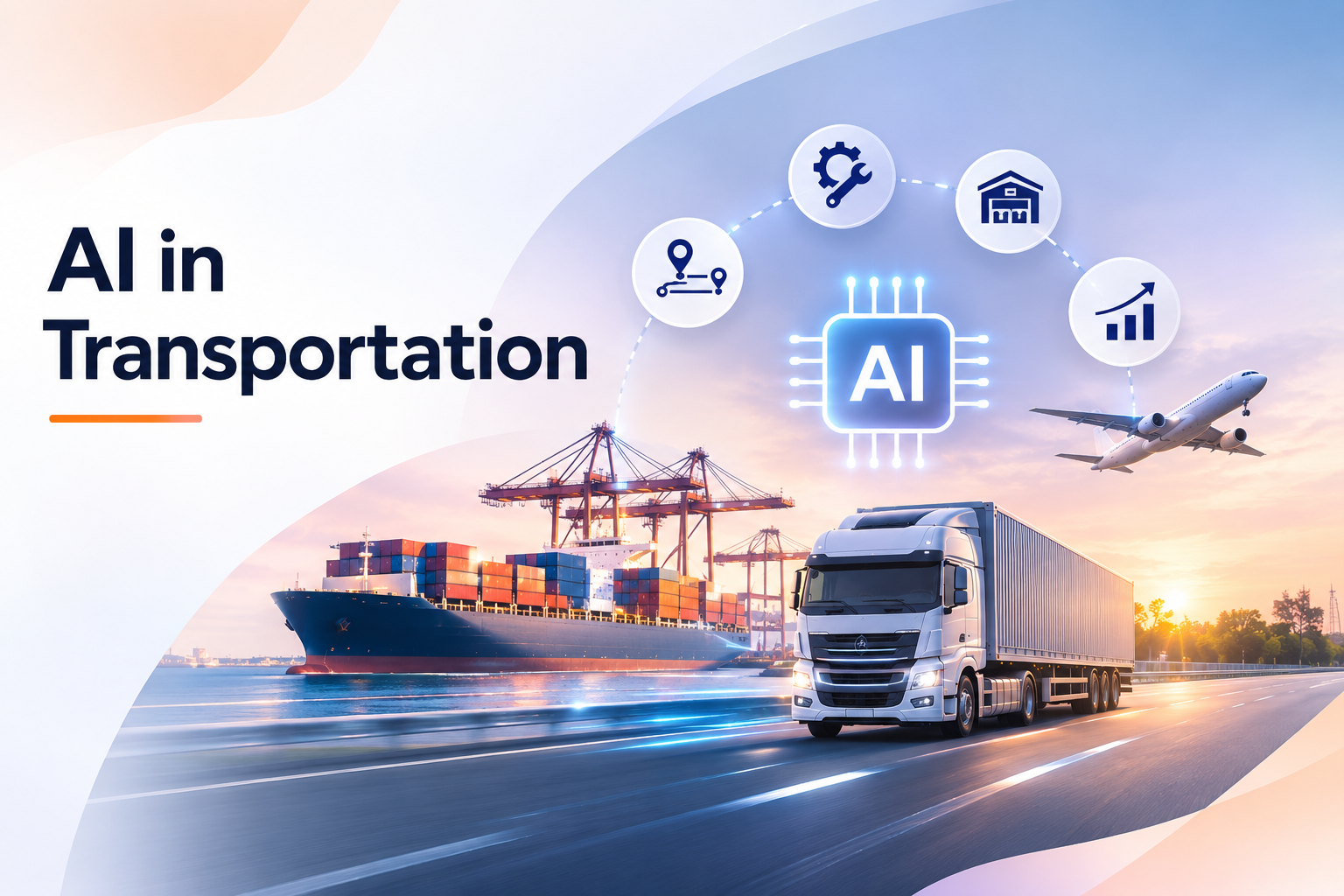
Imagine sitting in the central hub of a nationwide logistics network on a stormy Tuesday evening. Thousands of shipments are moving across highways, air routes, and ocean lanes. Suddenly, a severe weather front grounds cargo flights in the Midwest, while a port slowdown threatens perishable goods on the West Coast. A decade ago, dispatch teams would have spent all night making panicked phone calls, re-routing manually, and losing hundreds of thousands of dollars in delayed cargo.
Today, intelligent systems resolve these disruptions in milliseconds. Autonomous agents rerun algorithms, adjust delivery windows, notify customers, and reallocate truck loads before a single human manager even finishes their morning coffee.
Transportation is no longer just about moving boxes or vehicles from point A to point B, it is about orchestrating data. Modern enterprises leverage artificial intelligence to convert operational friction into a competitive advantage.
How is AI Used in Transportation?
At its core, AI in transportation applies machine learning algorithms, computer vision, Internet of Things (IoT) telemetry, and autonomous software agents to optimize every node of the supply chain. From dynamic route planning and fleet management to warehouse automation and predictive safety systems, AI transforms vast oceans of unstructured telemetry into real-time decision intelligence.
The 10 Brilliant Ways AI Is Transforming Transportation
1. Dynamic Route Optimization
Static routing is obsolete. Modern systems evaluate live traffic, weather patterns, historical bottlenecks, and road closures in real time.
- Technology Behind It: Azure Maps + Azure Machine Learning
- The Value: Reduces transit times by up to 20% and lowers fuel consumption significantly.
2. Fleet Predictive Maintenance
Unplanned fleet downtime erodes profit margins. By continuously analyzing sensor streams (vibration, temperature, engine diagnostics), predictive models flag component wear before catastrophic failure occurs.
- Technology Behind It: Predictive maintenance using IoT and machine learning powered by AWS IoT Core + Amazon SageMaker
- The Value: Reduces maintenance costs and eliminates unexpected road breakdowns.
3. Agentic Logistics & Autonomous Dispatch
Beyond simple automation, agentic workflows execute complex, multi-step tasks independently. If a delivery truck is delayed, AI agents auto-rebook appointments, alter drop-off sequences, and issue client updates without human intervention.
- Technology Behind It: agentic AI in logistics integrated via Salesforce Agentforce + Data Cloud
- The Value: Dramatically lowers back-office operational overhead and boosts resolution speeds. Learn more about our enterprise system integration on our BugendaiTech Services Page.
4. AI-Driven Demand & Capacity Forecasting
Overestimating or underestimating freight volume strains capital. Time-series algorithms predict demand spikes across micro-regions by analyzing historical shipment trends, local economic indicators, and seasonal surges.
- Technology Behind It: Databricks Lakehouse + PyTorch
- The Value: According to research by McKinsey & Company, AI-driven supply chain management allows companies to improve logistics costs by 15% and inventory levels by 35%.
5. Smart Fleet Safety & Driver Behavior Monitoring
In-cab AI cameras powered by computer vision detect signs of driver fatigue, distraction, or unsafe following distances in real time, offering immediate audio alerts.
- Technology Behind It: Edge AI + TensorFlow Lite on Telematics Hardware
- The Value: Reduces collision rates and lowers commercial liability insurance premiums.
6. Last-Mile Delivery & Load Density Maximization
The last mile represents up to 53% of total shipping costs. AI algorithms solve complex 3D bin-packing problems to maximize vehicle space while continuously tweaking delivery sequences.
- Technology Behind It: AI route optimization built on Google Cloud Vertex AI + Fleet Engine
- The Value: Maximizes load capacity per trip and slashes cost-per-delivery.
7. Automated Warehouse Operations & Vision Inspection
Autonomous Mobile Robots (AMRs) guided by spatial AI move goods effortlessly across warehouse floors, while automated visual inspection cameras detect parcel defects instantly.
- Technology Behind It: NVIDIA Isaac Robotics Platform + Computer Vision
- The Value: Accelerates fulfillment speeds while keeping picking errors near zero.
8. Dynamic Freight Pricing & Revenue Management
Carrier rates fluctuate rapidly based on fuel prices, market capacity, and seasonal shifts. Machine learning models adjust freight quotes dynamically to protect margins while maintaining competitive bids.
- Technology Behind It: Salesforce Einstein 1 Platform + MuleSoft
- The Value: Optimizes spot rate pricing to maximize carrier capacity utilization and margins.
9. Real-Time End-to-End Supply Chain Visibility
Legacy tracking relied on static milestone updates. Modern predictive ETA engines continuously calculate arrival times by correlating vessel telemetry, port congestion data, and customs clearance delays.
- Technology Behind It: Azure Event Hubs + Power BI Analytics
- The Value: Gartner projects that real-time transportation visibility platforms will become standard across 80% of global supply chains.
10. ESG Alignment & Carbon Emissions Reduction
Regulators and customers increasingly demand sustainable operations. AI calculates exact carbon footprints per shipment and suggests lower-emission multimodal routes.
- Technology Behind It: Salesforce Sustainability Cloud + Snowflake
- The Value: Simplifies corporate ESG compliance reporting while curbing total carbon outputs.
The BugendaiTech Stance: Where Should You Start?
Do not start your AI journey with autonomous fleets or complex agentic dispatching. Start with real-time ETA prediction and delay risk scoring.
Why? ETA prediction relies on data you already possess (GPS logs and timestamped order histories). It yields immediate customer satisfaction wins, creates fast ROI, and establishes clean data pipelines required for advanced initiatives like agentic workflows.
Navigating the Risks: Data, Bias, Safety, and Regulation
While the benefits are transformative, deploying AI in transit requires navigating critical risks:
Step-by-Step Guide: How to implement AI in a Logistics Company
Implementing AI does not require a complete overhaul of your existing infrastructure. Follow our proven 6-step roadmap:
(BugendaiTech's 6-step execution framework for logistics AI deployment.)
|
STEP 01
Step 1: Audit Data & Identify Core Bottlenecks Pinpoint specific operational friction points (e.g., late deliveries, high fuel expenditure, or fleet downtime). |
STEP 02
Step 2: Unify Your Data Ecosystem Break down operational silos using unified storage layers like Salesforce Data Cloud or Azure Data Lake. |
|
STEP 03
Step 3: Launch a High-Impact, Low-Effort Pilot Run a focused pilot, such as delay prediction, to prove ROI within 90 days. |
STEP 04
Step 4: Integrate Models into Operational Workflows Embed AI directly into existing driver apps and dispatch consoles via APIs. |
|
STEP 05
Step 5: Enforce Governance, Safety, and Compliance Establish strict data security standards and review regulatory demands (e.g., EU AI Act, GDPR). |
STEP 06
Step 6: Scale to Agentic Workflows Gradually introduce autonomous agents to execute multi-step logistics adjustments automatically. |
Ready to Accelerate Your AI Strategy?
Transforming your transportation network requires the right technical architecture and domain expertise. At BugendaiTech, we help enterprise companies build scalable, secure, and high-ROI AI solutions tailored to their operational ecosystem.