7 Proven Ways Microsoft Transforms Transportation in 2027
Published on: 26 October 2026
Author: Annapurna
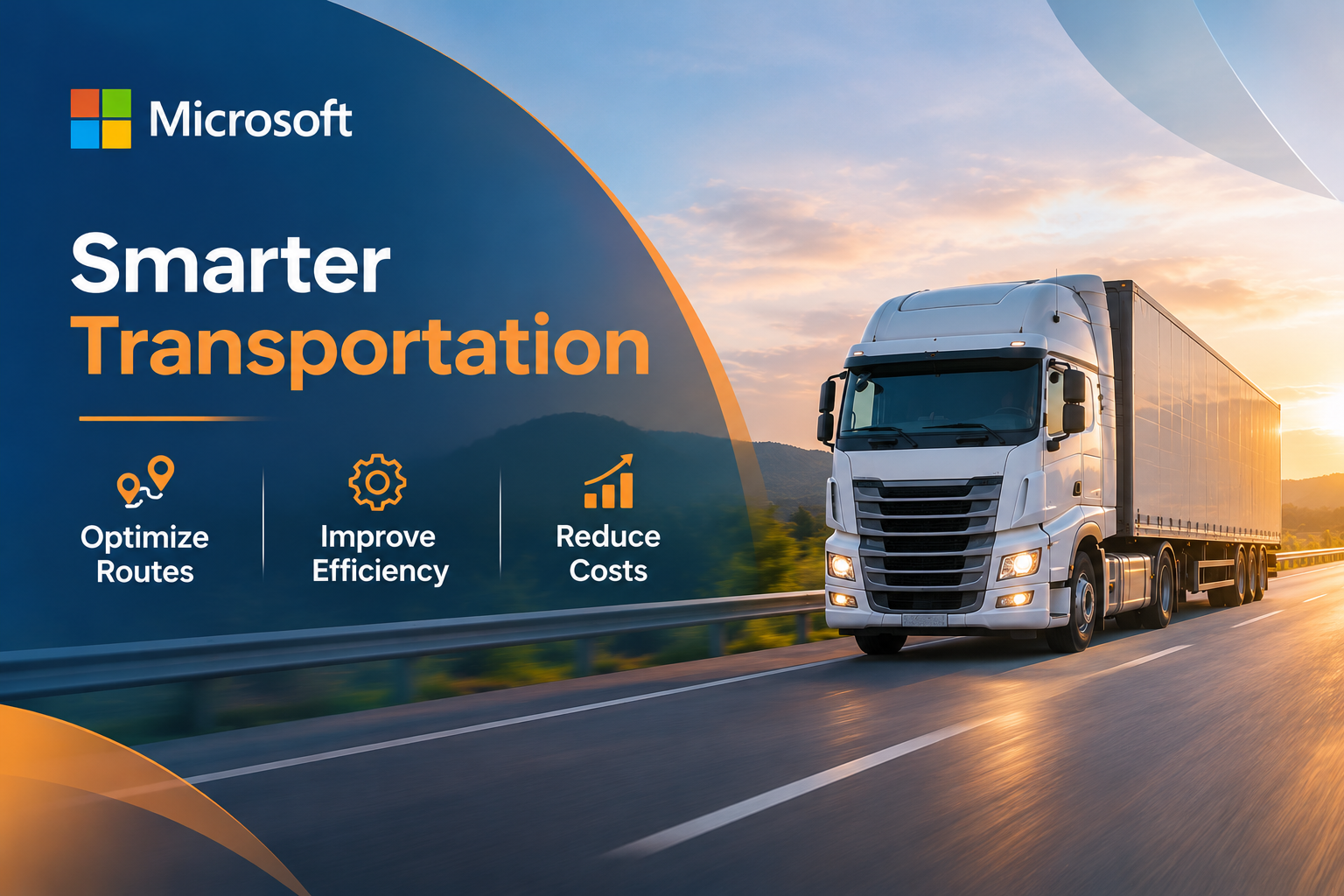
The transportation and logistics industry is undergoing a massive digital transformation. Fleet directors and supply chain leaders are no longer just asking how to move freight from point A to point B, they are asking how to eliminate empty miles, predict vehicle maintenance before breakdowns happen, and optimize global logistics routes using real-time telemetry.
To stay competitive in 2027, modern fleet operators are turning to unified cloud ecosystems. In this blog, we explore how Microsoft’s enterprise stack, from advanced AI capabilities to connected IoT infrastructure, is modernizing logistics operations from end to end.
What is Microsoft Dynamics 365 for Transportation?
At its core, Microsoft dynamics 365 for transportation refers to the specialized logistics, dispatch, and routing capabilities embedded within Dynamics 365 Supply Chain Management (Transportation management) and Field Service.
Instead of forcing logistics managers to rely on disconnected legacy software, Microsoft unifies core operations into a single pane of glass. By integrating real-time telemetry, order planning, and financial workflows, companies gain end-to-end visibility across global trade networks, private fleets, and third-party logistics (3PL) providers.
What is the Dynamics 365 Transportation Management Module?
The Microsoft transportation management module features empower logistics teams to control inbound and outbound freight, streamline carrier selection, and lower overall operational expenses. Key functional capabilities include:
- Rating and Routing Engines: Automatically evaluate carriers based on rate structures, fuel surcharges, service-level agreements (SLAs), and transit times.
- Consolidation and Load Building: Combine multiple sales, purchase, or transfer orders into optimized shipment loads to maximize truck capacity and eliminate wasted freight space.
- Appointment Scheduling & Yard Management: Coordinate dock door availability to reduce driver wait times and streamline warehouse turnaround.
- Freight Reconciliation and Audit: Automatically match carrier invoices against rated bills of lading to avoid billing disputes and overcharges.
- Predictive Analytics with Copilot: Leverage embedded AI within Dynamics 365 to forecast demand surges, anticipate route delays, and automate routine carrier communication.
Result
According to recent industry benchmarks, companies implementing integrated cloud transportation solutions experience up to a 12% reduction in freight costs and up to an 18% drop in empty miles by leveraging dynamic route planning and intelligent load consolidation.
7 Proven Ways Microsoft Transforms Transportation in 2027

1. Intelligent Route Optimization and Fleet Tracking
By pairing dynamics 365 transportation management with Azure Maps and Azure IoT Hub, fleet managers track vehicle locations, engine diagnostics, and driver status in real time. Microsoft Azure for logistics processes thousands of GPS data points per second, allowing dynamic re-routing around traffic congestion, adverse weather, or road closures, ensuring on-time deliveries while reducing unnecessary fuel burn.
2. Next-Gen Fleet Management & Frontline Productivity
Fleet management extends beyond vehicles; it requires keeping drivers and frontline teams connected. Through integrated mobile solutions across Dynamics 365 Field Service and Microsoft Teams, frontline workers receive real-time schedule updates, turn-by-turn navigation, digital proof of delivery, and safety alerts directly on their mobile devices, keeping field teams safe and productive.
3. Unified Business Intelligence with Power BI and Microsoft Fabric
Data silos are the enemy of fast logistics decisions. By combining Power BI with Microsoft Fabric, enterprise transport teams centralize data from telemetry devices, ERP systems, and warehouse management systems. Interactive dashboards give executive leadership real-time visibility into cost-per-mile, carrier performance, and carbon emissions.
4. End-to-End Microsoft for Supply Chain Optimization
Achieving a resilient supply chain requires synchronizing transportation with procurement and inventory management. With comprehensive tools designed for Microsoft for supply chain optimization, companies build end-to-end visibility across inbound raw materials and outbound finished goods, helping supply chain managers prevent bottlenecking at port terminals and distribution centers.
5. Autonomous Vehicle Development Using Microsoft
The future of long-haul transport relies heavily on autonomous systems. Autonomous vehicle development using Microsoft provides OEMs, Tier-1 suppliers, and logistics innovators with high-performance computing, AI training models, and simulation environments built on Azure. Autonomous vehicle developers run millions of virtual driving miles securely in the cloud to validate safety algorithms before real-world deployment.
6. Cloud Computing in Transit for Edge Efficiency
Modern logistics hubs and long-haul vehicles operate as moving data centers. Deploying cloud computing in transit via Azure Edge devices allows fleet vehicles to perform edge processing for instant safety alerts, driver fatigue detection, and predictive maintenance, even when driving through regions with spotty cellular connectivity.
7. AI-Driven Maintenance and Driver Safety
Unplanned downtime can cost logistics companies thousands of dollars per vehicle day. Dynamics 365 Supply Chain Management uses predictive AI models to analyze sensor inputs (such as tire pressure, brake wear, and engine temperature) and automatically schedule preventive maintenance work orders before a breakdown occurs on the highway.
Dynamics 365 vs SAP TM vs Oracle OTM: Enterprise Logistics Comparison
Choosing the right platform depends on existing tech stack requirements, budget, and implementation timelines. Below is a comparison of leading enterprise systems:
| Feature / Metric | Dynamics 365 Supply Chain Management |
SAP TM (Transportation Management) |
Oracle OTM (Transportation Management) |
|---|---|---|---|
| Core Architecture | Native Microsoft Azure Cloud & Fabric integration | SAP S/4HANA Ecosystem | Oracle Cloud Infrastructure (OCI) |
| AI & Automation | Built-in Copilot, Power Platform automation | SAP Business AI | Oracle Cloud AI |
| Rollout Time | 6-9 Months | 12-18+ Months | 9-15 Months |
| Best-Fit Company Size | Mid-Market to Large Enterprise | Large Global Enterprises | Large Enterprise to Multinationals |
| Usability & UX | High (Familiar Microsoft UI & Office 365) | Moderate | Moderate |
Dynamics 365 vs SAP TM for Logistics Companies
When evaluating dynamics 365 vs sap tm for logistics companies, decision-makers often balance cost, flexibility, and speed to value. While SAP TM is heavily utilized by massive global conglomerates, it often requires lengthy deployment cycles and complex custom coding.
In contrast, Microsoft dynamics 365 for transportation offers an agile, modular architecture. It integrates seamlessly with existing tools like Power BI and Microsoft 365, allowing mid-market and enterprise logistics businesses to achieve faster time-to-value with significantly lower total cost of ownership (TCO).
How Much Does Dynamics 365 Cost for a Logistics Company?
Pricing for Dynamics 365 depends on user licensing, module requirements, and implementation scope:
How to Implement Dynamics 365 for Transportation in 7 Steps

Transform Your Logistics Operations with BugendaiTech
Navigating cloud transformation requires a partner who understands both technology and logistics workflows. BugendaiTech, a Microsoft partner, implements Dynamics 365 for transportation firms looking to digitize fleet management, optimize routes, and reduce overall supply chain expenses.